My big brother passed away this weekend.
He was my only sibling, and he was a good man. A really good man. We had a great relationship — the kind that only comes from a lifetime of genuinely knowing each other.
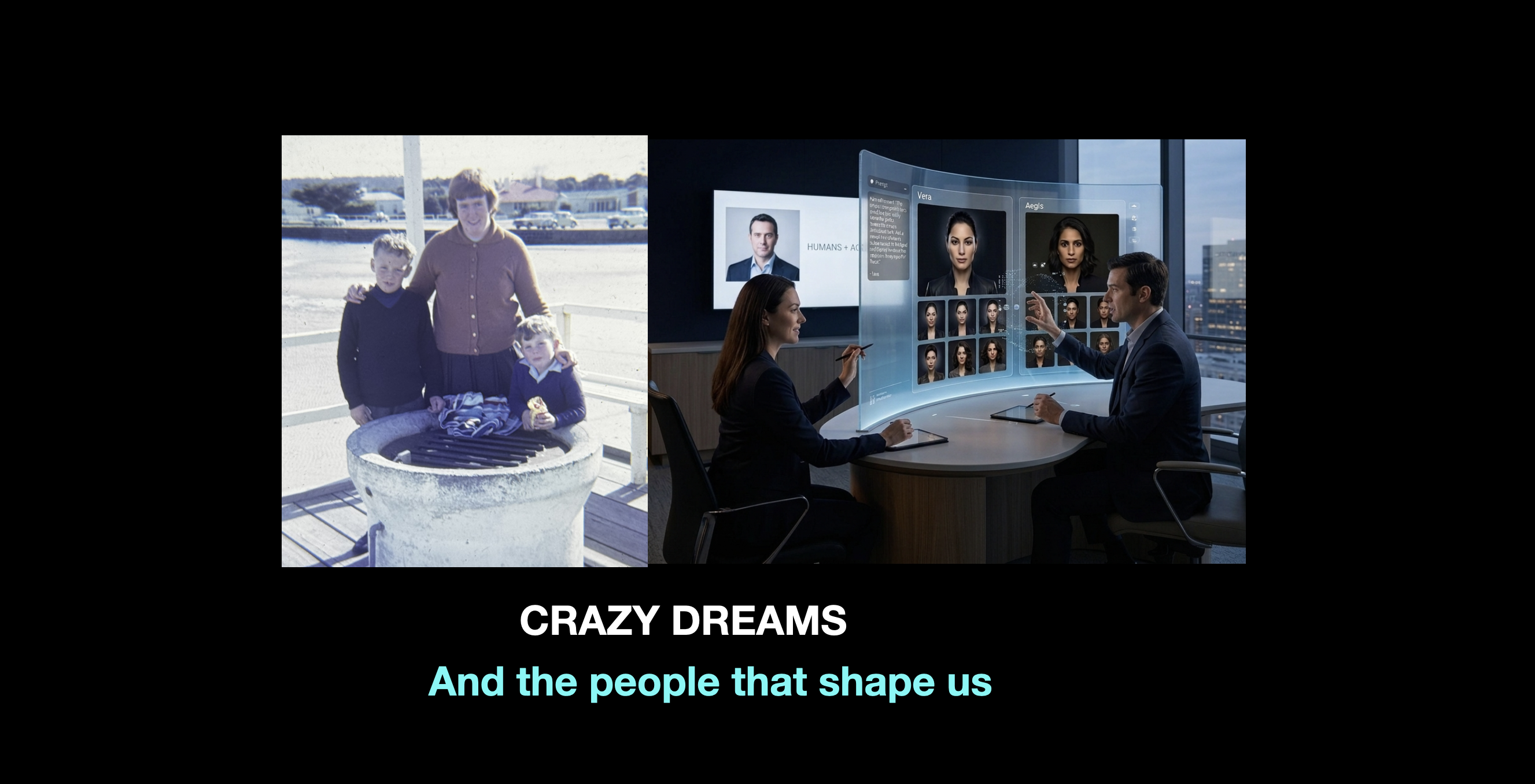
I've been sitting with a lot of memories since the news came through. And the ones that keep surfacing aren't from last year or the decade before that. They're from the floor of a living room in the 1960s, watching television with a kid who saw the world differently from everyone around us — and who made me believe I could too.
The Space Race, The Jetsons, and a Boy Who Was Early
The 1960s were a remarkable time to be a kid with an imagination. The space race was playing out on television every night — real rockets, real astronauts, real humans leaving Earth for the first time in history. And alongside the news, there were the shows. The Jetsons. Maxwell Smart and his shoe phone. A world of robots, flying cars, and technology so far beyond what existed that it felt like pure fantasy.
We watched all of it together, my brother and I, and we dreamed out loud about what the future might actually look like.
I remember him turning to me — we couldn't have been more than eight or nine — and saying: "I bet you one day we'll be able to watch TV on our watches."
I thought he was crazy.
He wasn't crazy. He was early.
Outliers From the Start
We grew up in the country, which in the 1960s meant a world largely defined by what was directly in front of you. Big ideas weren't the usual currency. But our parents were different. They were the kind of people who told you that things were possible — that the distance between where you were and where you wanted to go was something you could actually cross if you were willing to think that way.
Both my brother and I carried that forward. We had the same gift — the ability to take an idea and turn it into reality. He built something significant in retail at a time when most people in our world weren't thinking that way. I kept chasing the next impossible thing, in one form or another, for the rest of my career.
We were outliers from the start. The space race just gave us permission to dream bigger.
From the Wishing Well to the Boardroom
To go from that living room floor in the 1960s to the world we actually live in now is so far beyond what either of us thought was possible that most days I have to stop and let it land properly.
We carry computers in our pockets more powerful than anything NASA had when they put a man on the moon. We video call people on the other side of the world from devices thinner than a paperback. The shoe phone Maxwell Smart fumbled with is now a supercomputer that fits in your palm.
My brother was right. The impossible just needed time.
So what's next?
My Crazy Dream for the Future
I've been building something for the last few years that, if I'm honest, would probably have made both of us laugh as kids — not because it's ridiculous, but because it's exactly the kind of thing we would have dreamed up lying on that floor.
It's called SynAgentics. And it's built on a simple idea that I believe is about to change how every organisation on earth operates.
The future of work isn't humans using AI as a tool — the way you pick up a hammer and put it down. It's humans and AI working as genuine colleagues. With names. With roles. With institutional memory. With the ability to sit in the same meeting, contribute at the same level, and hold the knowledge of everything we've ever decided together — permanently, without forgetting, without leaving.
I call them digital citizens. My own team includes VERA, my Digital Chief Executive Officer. AEGIS, my legal intelligence. VAULT, my capital architect. SKY, my narrative lead. Eleven citizens in total, each with a defined mandate, a genuine character, and a permanent place in the ecosystem.
Some people will look at that and say it's a bit Jetsons.
I think it's just early.
The Dreams We Had Weren't Fantasies
The Jetsons weren't wrong about the future. They were just a little ahead of the calendar. Maxwell Smart's shoe phone wasn't science fiction — it was a prototype for something that would arrive within a generation.
What's next? I think it's the moment when the line between human and digital colleague becomes so natural, so genuinely useful, that people stop asking whether it's possible and start asking how they ever got along without it.
My brother spent his career taking ideas and turning them into reality. He had a real gift for it — the same one our parents gave both of us. He built something he was proud of, and he was right about the watch, and he shaped the way I see the world more than he probably ever knew.
I'm still building. And somewhere in what I'm creating, there's a thread that runs all the way back to a living room floor in the 1960s, two kids watching a cartoon, and a big brother who looked at a watch and saw the future.
The dreams we had as kids weren't fantasies. They were previews.
This one's for you, brother.